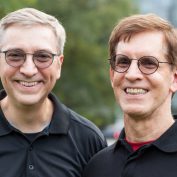
Jen Beeman, What’s the Stitch? Jen Beeman ’09 dishes on her popular blog and pattern company, Grainline Studio. Beeman runs Grainline Studio, located in Chicago’s Garfield Park. Jen Beeman ’09 began Grain
Scot O’Hara and Dale Boyer, By The Books Scot O’Hara MFA ’95 and Dale Boyer honored their late friend Judith Handschuh MFA ’96 by publishing her novel. Boyer (left) and O’Hara (right) combined their last names to crea
Alumni News & Notes Dear Alumni, You have lots of options when choosing how to get involved with the Columbia alumni community. Just the other day, I was talking with an alum and he told me there w
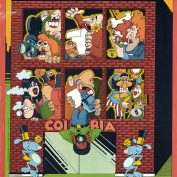
Celebrating 125 Years: An Introduction This 1972 poster for Columbia depicts 540 N. Lake Shore Drive, the school’s then-headquarters, as a hive of creative energy and self-expression. Lined up like the frames of a comic
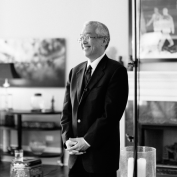
Questions for President Kwang-Wu Kim DEMO: You became president of Columbia in 2013. What has surprised you about the college? PRESIDENT KIM: A wonderful surprise was coming to understand more of the history. In pa
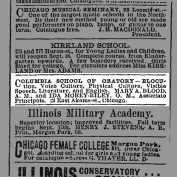
1890-1927: Founding and Beginnings As Chicago prepared for the World’s Columbian Exposition of 1893, two orators and educators wisely chose the Windy City as the home of a new public speaking college. From the as
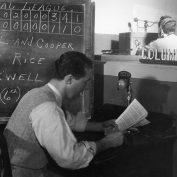
1927–1944: Columbia in Transition 1927–1944: Columbia in Transition Columbia College of Expression went through a period of great change following the deaths of its founders. The media landscape of the time was ch
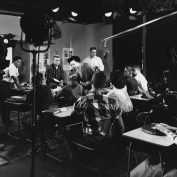
1944-1960: Postwar Boom In the mid-20th century, Columbia became a hub for veterans eager to enter the rapidly growing fields of radio and television. Columbia adapted to the demand for broadcast training
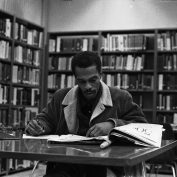
1961-1992: Renewal and Expansion The Columbia of the ’60s was the ultimate underdog. With flailing enrollment and few resources, the school could have folded. Instead, President Mike Alexandroff turned it into a t
1992-2015: Continued Growth An ever-increasing focus on the student experience and a permanent home in the South Loop continued to transform Columbia through the new millennium. Today, the college thrives as